
top games with robot combat and customization usually come down to one thing: you want fights that feel weighty, and you want your build choices to visibly change how you win. Not just a cosmetic paint job, but a different playstyle, different counters, different mistakes you learn from.
That’s why this topic matters more than it sounds. In a lot of “mech” games, combat is solid but customization stays shallow, or customization is deep but moment-to-moment piloting feels floaty. The best picks sit in the overlap and keep rewarding you after the honeymoon phase.
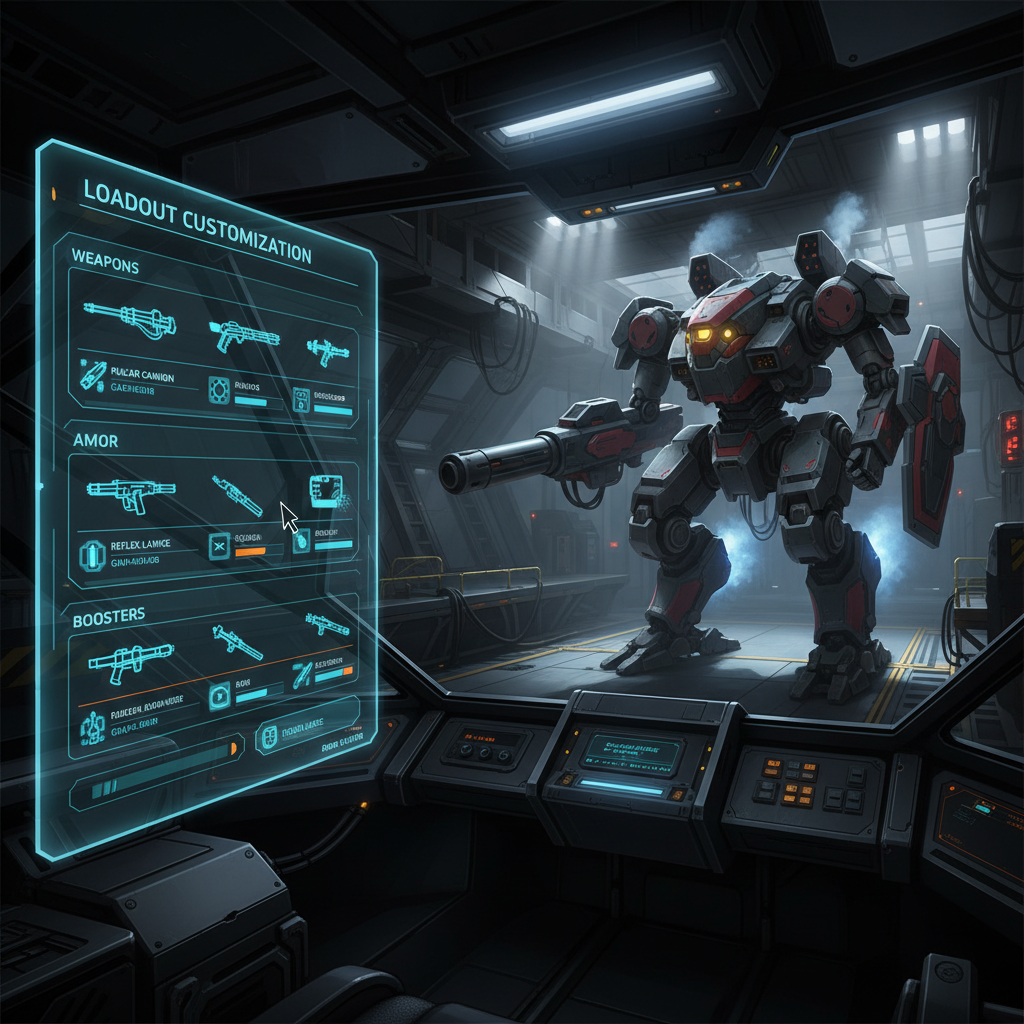
Below, you’ll get a practical shortlist, a quick way to judge which games match your taste, and a few setup tips that save time. I’ll also flag common traps, like “more parts” not actually meaning “more build variety.”
What “robot combat & customization” really means (and what to look for)
People say they want customization, but they often mean different things. It helps to split it into a few buckets so you don’t buy the “wrong” kind of depth.
- Mechanical customization: parts that change stats and behavior, like recoil, heat, stagger, energy drain, turn speed, jump profile.
- Role customization: builds that create jobs in a match: brawler, skirmisher, artillery, assassin, support, jammer.
- Progression customization: how fast you unlock and iterate, and whether experimentation feels affordable.
- Cosmetic customization: paint, decals, chassis skins. Fun, but it can’t carry the whole experience.
If you primarily play PvP, balance and readable counterplay matter more than having 500 parts. If you mainly play campaign or co-op, build expression and encounter variety tend to matter more.
Quick comparison table: best picks at a glance
This table leans on what most players actually care about: how good combat feels, how meaningful builds feel, and what the core mode loop looks like.
| Game | Customization depth | Combat feel | Best for | Notes |
|---|---|---|---|---|
| Armored Core VI: Fires of Rubicon | High | Fast, precise, punishing | Build tinkering + skill checks | Strong “parts change everything” design |
| MechWarrior 5: Mercenaries | Medium-High | Heavy, sim-leaning | Stompy PvE sandbox | Career loop, lance management matters |
| Titanfall 2 | Medium | Fluid, arcade-sharp | Fast action + iconic Titans | Customization more “loadout tuning” than deep engineering |
| Into the Breach | Medium | Turn-based, tactical | Chess-like mech tactics | Customization via squads, pilots, upgrades |
| DAEMON X MACHINA | Medium-High | Arcade with verticality | Loot + build variety | Style-forward, experimenting feels encouraged |
| BattleTech (PC) | Medium | Turn-based, heat and positioning | Mech squad management | Mechs as a roster, not a single “main” |
Top games with robot combat and customization (what each does best)
Here’s the “editor’s view” of why these titles keep coming up. The goal isn’t to crown one winner, but to match you to the right loop.
Armored Core VI: Fires of Rubicon
If you want the feeling that swapping a generator or booster changes your entire relationship with a boss, this is the cleanest modern answer. You iterate quickly, test builds, then get immediate feedback when a mission exposes your weak link.
- Why it works: high build expression, fast retries, combat that rewards reading openings.
- Who it fits: players who enjoy tuning, testing, and adapting when a build stops working.
MechWarrior 5: Mercenaries
This is the “weight” pick. Movement has inertia, damage feels consequential, and your choices about loadouts and lance composition affect mission outcomes in a very old-school way.
- Why it works: satisfying stompy combat, lots of PvE time to justify customization.
- Who it fits: players who want a mercenary career vibe, not just isolated matches.
Titanfall 2
Customization here is more curated, but combat is ridiculously readable and fun. You’re picking Titan kits and pilot loadouts that change tactics, even if you’re not swapping micro-parts like a garage sim.
- Why it works: excellent pacing, strong titan identity, high skill ceiling.
- Who it fits: players who value “feel” and movement as much as build depth.
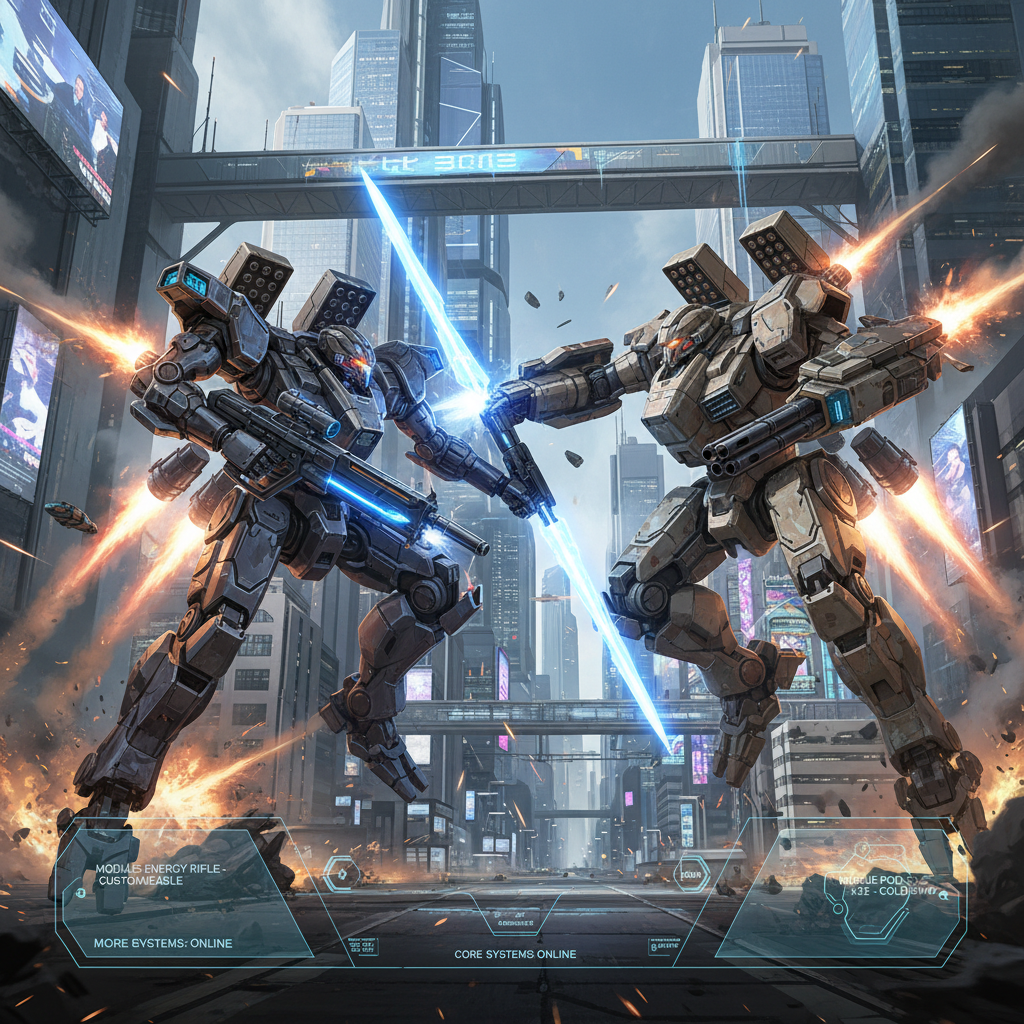
Into the Breach
Robot combat doesn’t need real-time piloting to feel deep. This is a tight tactics game where “customization” shows up as squad selection, pilot perks, and upgrade decisions that reshape your puzzle-solving options.
- Why it works: every turn matters, minimal grind, high replay value.
- Who it fits: players who like optimization, planning, and clean systems.
DAEMON X MACHINA
This one leans into collecting gear and experimenting. Builds can swing from close-range shredders to ranged pressure setups, and the game generally wants you to try weird combinations.
- Why it works: lots of parts to play with, flexible pacing.
- Who it fits: players who enjoy loot loops and testing “what if” builds.
BattleTech (PC)
Think of this as managing a stable of machines and pilots. Your customization decisions show up across a company: heat management, weapon ranges, initiative, and how you plan engagements over multiple turns.
- Why it works: strong strategic layer, satisfying long-term roster building.
- Who it fits: players who like campaign planning more than twitch reflex tests.
Self-check: which style of mech customization do you actually want?
Answer these quickly and you’ll narrow the list without overthinking it.
- You want to rebuild after every tough mission: lean toward Armored Core VI.
- You want slower, heavier combat where positioning and armor facings matter: MechWarrior 5 or BattleTech.
- You want fast matches and a clean skill ladder: Titanfall 2.
- You want deep tactics without reaction time pressure: Into the Breach or BattleTech.
- You want lots of parts and a “try stuff” vibe: DAEMON X MACHINA.
One more reality check: if you hate menu time, you probably don’t want the deepest garage simulator. In that case, a curated system can feel better, even if it’s less “true customization.”
Practical setup tips to get more from customization (without grinding)
Most players lose momentum because their first builds are unfocused, then every mission feels like a gear check. A few habits make the learning curve smoother.
Pick a single win condition per build
Decide what your mech wants to do in fights: burst stagger, sustained DPS, long-range pressure, hit-and-run, area denial. Then choose parts that support that goal instead of “a little of everything.”
- Example: if you want close-range aggression, prioritize mobility, short TTK weapons, and survivability tools that matter up close.
- Example: if you want mid-range control, build around accuracy, ammo economy, and reliable disengage options.
Test changes in a controlled way
Swap one variable at a time: weapon set, then legs, then generator, then boosters. Otherwise you won’t know what actually improved performance.
Use “budget builds” while learning
In many games, the most expensive option isn’t automatically better for your skill level. A simpler loadout that you can pilot cleanly often outperforms a complicated setup you can’t execute.
Common mistakes and myths (this is where people get stuck)
- Myth: more parts equals more variety. If balancing pushes everyone to the same few meta items, variety shrinks. Look for games where trade-offs feel real.
- Mistake: copying a build without copying the playstyle. A “top” loadout might assume aggressive positioning or perfect heat management.
- Mistake: ignoring match goals. PvE missions and PvP matches reward different risk profiles, so the same loadout can feel amazing in one mode and awful in another.
- Myth: customization fixes fundamentals. Aim, movement, spacing, target selection still matter. Customization amplifies good decisions, it rarely replaces them.
According to ESRB, game ratings and content descriptors help players understand age-appropriate content, which is worth checking in mech games where violence intensity varies by title.
When it’s worth looking for deeper help (or community resources)
If you’re bouncing off a game you “should” like, it’s often because one system detail isn’t clicking: heat thresholds, stagger windows, damage types, economy, or how a mission spawns pressure. In that case, a short build guide or community discussion can save hours.
Where to look, depending on your comfort level:
- In-game training/test ranges: best for learning feel and breakpoints.
- Official Discords and curated wikis: useful for mechanics clarification, patch-era context.
- Accessibility settings: if motion, camera, or reaction demands cause discomfort, adjusting settings may help, and for persistent issues it can be smart to consult a qualified professional.
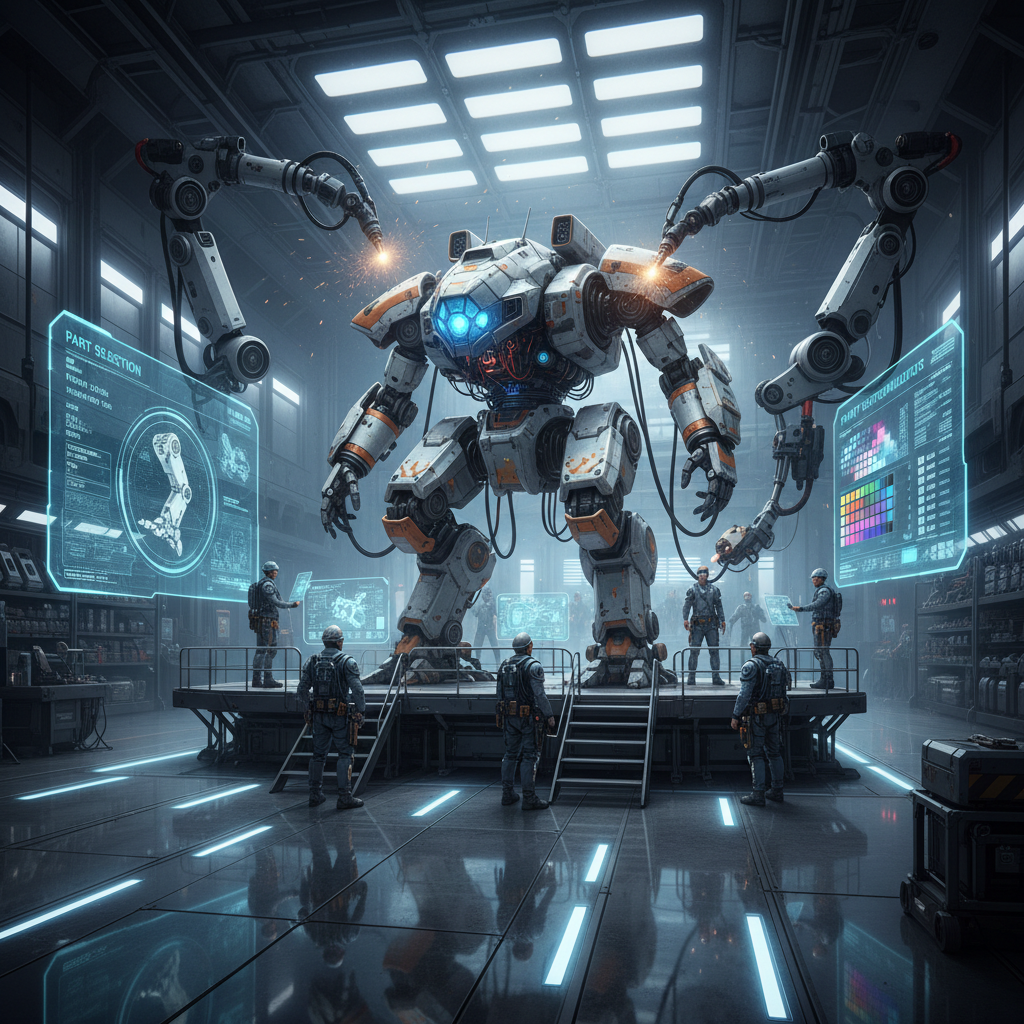
Key takeaways + how to choose in 5 minutes
- For deep buildcraft with intense real-time combat: Armored Core VI is the safest bet.
- For heavy mech fantasy in PvE: MechWarrior 5 stays satisfying for longer sessions.
- For fast, polished action with lighter tuning: Titanfall 2 still holds up.
- For tactical depth without twitch pressure: Into the Breach (and BattleTech if you want a longer campaign arc).
If you’re shopping specifically for top games with robot combat and customization, decide your priority first: piloting feel, build depth, or long-term progression. Once you pick that, the “best” choice usually becomes obvious.
FAQ
What are the top games with robot combat and customization on PC right now?
Armored Core VI, MechWarrior 5, BattleTech, and Into the Breach are common PC-friendly picks, with different flavors of combat. The right answer depends on whether you want real-time piloting or turn-based tactics.
Which mech game has the deepest customization without being overwhelming?
Many players find Armored Core VI deep but learnable because iteration is fast and feedback is immediate. If you want slower pacing, BattleTech spreads decisions across a squad, which can feel clearer than tuning a single “perfect” mech.
Is Titanfall 2 good for players who mainly want customization?
It’s great if your idea of customization is meaningful loadout choices and strong Titan identities, not deep component-level engineering. If you want granular part swapping, it may feel limited.
What’s better for beginners: MechWarrior 5 or Armored Core VI?
It depends on what you mean by beginner. MechWarrior 5 tends to reward patient pacing and PvE learning, while Armored Core VI asks for faster execution but makes experimentation painless through quick rebuilds.
Do turn-based robot games still count as robot combat?
Absolutely. Into the Breach and BattleTech deliver “combat” through positioning, threat management, and resource trade-offs rather than reaction speed, and customization still shapes your solutions.
How do I know if a game’s customization is mostly cosmetic?
Look for systems where parts change mobility, energy/heat behavior, weapon handling, or roles in a team. If most unlocks are skins and the stats barely move, the customization usually won’t change how fights play out.
What should I prioritize when building my first mech loadout?
Pick a single range band and a single plan for survivability, then tune everything around that. Early builds fail because they try to cover every distance and end up weak everywhere.
Wrap-up
The fun part of mech games isn’t just winning, it’s realizing your next build fixes a problem you couldn’t brute-force yesterday. If you want that loop, start with one title that matches your pace, then give yourself permission to iterate instead of chasing a “perfect” loadout on day one.
If you’re comparing options and want a more tailored shortlist of top games with robot combat and customization based on your platform, preferred modes, and tolerance for build menus, share what you usually play and what kind of combat tempo you like, and I can narrow it down quickly.