
top sandbox games with player owned economies are popular for one simple reason: your time, skill, and social connections can matter as much as your combat stats, because players set prices, run shops, and decide what’s “valuable” this week.
If you have ever felt stuck in an MMO where the auction house is basically solved, or where the “economy” means selling loot to an NPC vendor, a player-driven market feels different, sometimes in a great way, sometimes in a messy way.
This guide helps you pick games where the economy is truly shaped by players, plus how to tell whether a game’s market will fit your playstyle, and what to watch out for so you do not lose hours to avoidable mistakes.
What “player-owned economy” actually means (and why it feels different)
A player-owned economy usually means most goods and prices are created and determined by players: crafting drives supply, trading drives prices, and scarcity is real because items do not magically appear from NPCs in unlimited quantities.
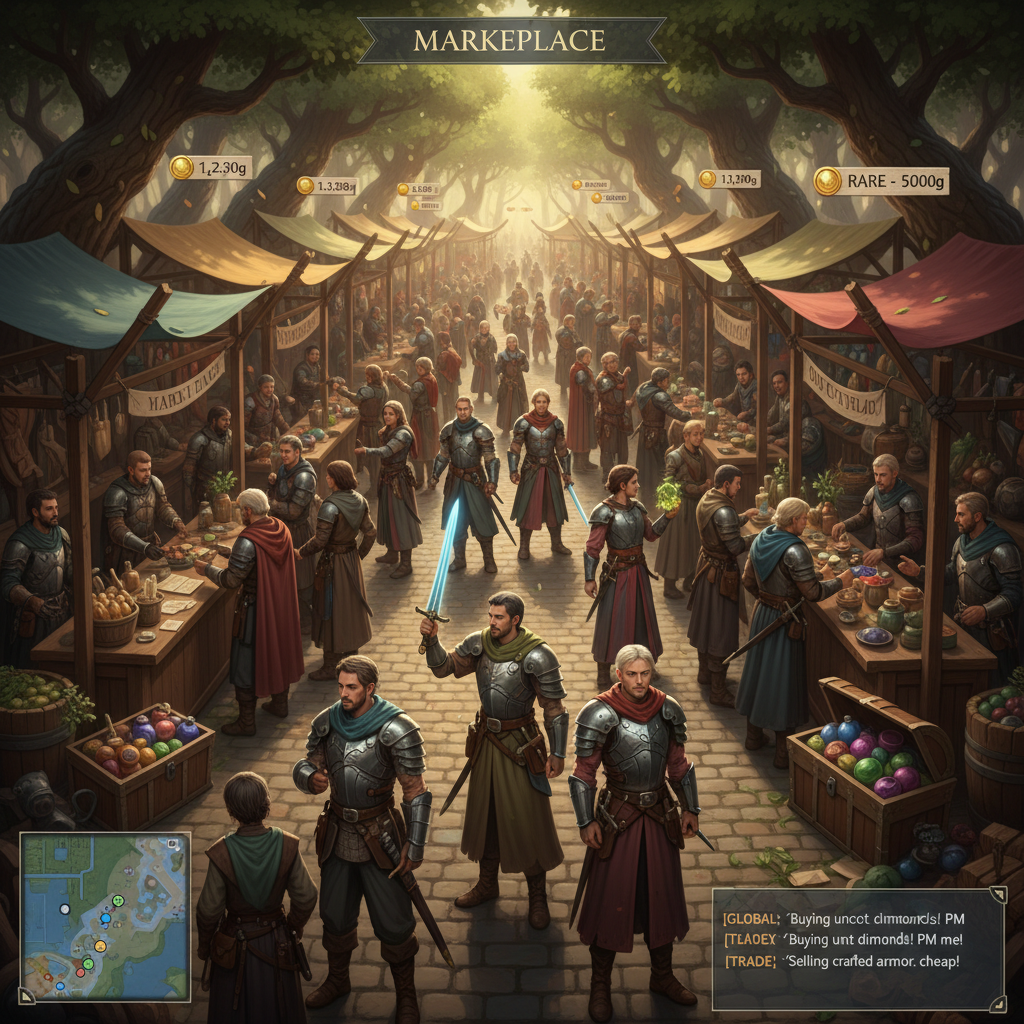
In practice, that tends to create a few recognizable behaviors:
- Crafting has real purpose, because crafters produce gear, consumables, building parts, ships, ammo, and more.
- Trade routes and location matter, especially when the world has regional markets or hauling risk.
- Guild politics and war affect prices, because territory control can change tax rates, access to resources, and safety.
- Markets can be volatile, since players stockpile, corner niches, or react fast to patches.
According to EVE University, a long-running educational community for EVE Online, player industry and trade form the backbone of how the game world functions, and learning the market is a core skill rather than a side activity.
Quick comparison: top sandbox picks with player-driven markets
If you want a fast short list, these are well-known options where players strongly influence supply chains, pricing, and availability. Some have heavier PvP pressure than others, so match the game to your tolerance for risk.
| Game | Economy style | Best for | Watch-outs |
|---|---|---|---|
| EVE Online | Deep player industry, regional markets | Traders, industrialists, alliance-scale logistics | Steep learning curve, scams and ganks |
| Albion Online | Player-crafted gear, city markets | Crafting loops, solo-to-guild progression | Full-loot zones can punish mistakes |
| RuneScape (OSRS/RS3) | Robust trading, skilling-driven supply | Skilling, flipping, long-term account building | Grinds, bot pressure varies over time |
| Foxhole | Player logistics fuels a war economy | Teamplay, supply chains, meaningful hauling | Time commitment, coordination overhead |
| Mortal Online 2 | Crafting + local trade in a harsh world | Hardcore sandbox fans, local communities | High risk, niche vibe, learning pain |
| Entropia Universe | Player trade with real-cash-like systems | Market watchers who like unusual economies | Real money risk, proceed cautiously |
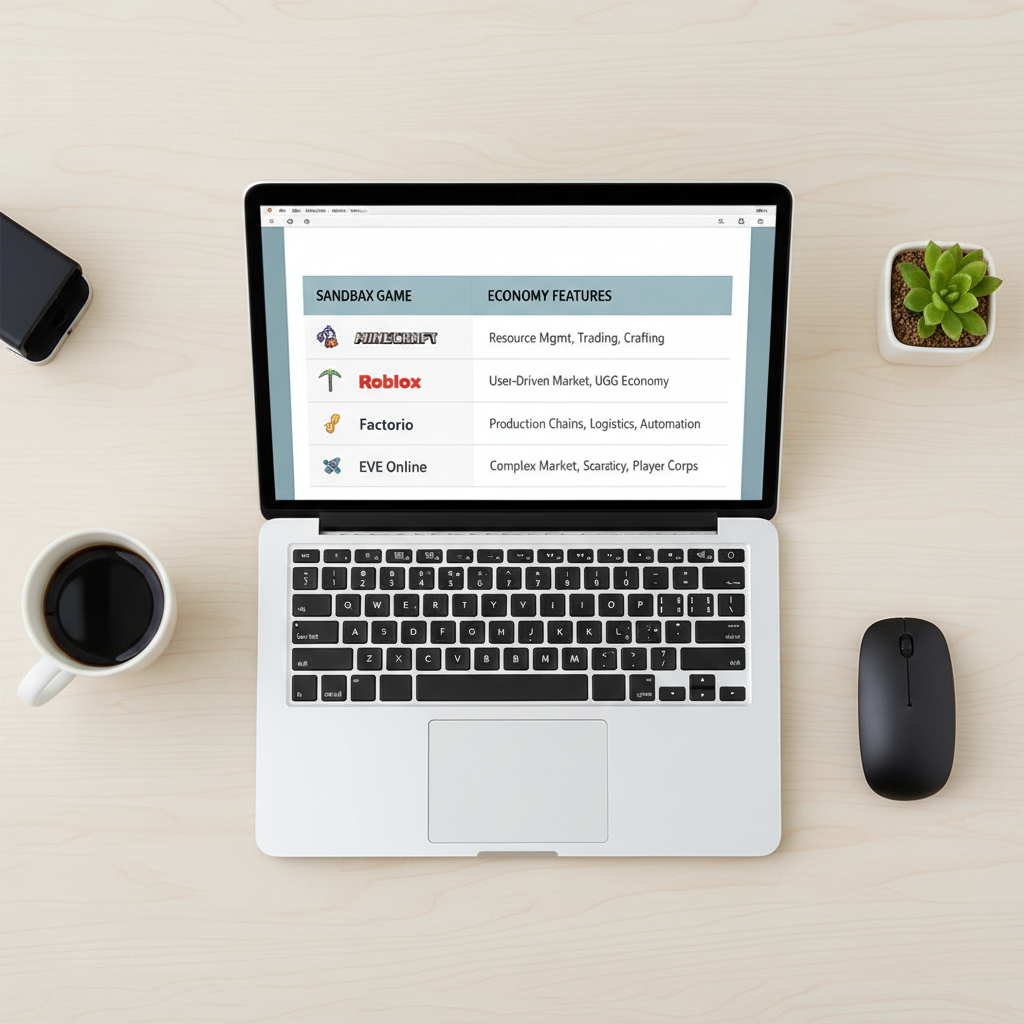
Top sandbox games with player-owned economies (what makes each one tick)
EVE Online
EVE is the classic answer when someone asks for a player-owned market, and for good reason. Players mine, refine, manufacture, haul, and sell, and many “everyday” ships and modules you see in space come from other players’ industry.
- Why the economy works: destruction is constant, and replacement demand keeps industry relevant.
- What you can do early: run small hauling routes, produce basic modules, or trade between regions.
- Reality check: you can make mistakes fast, and social engineering is part of the sandbox.
According to CCP Games, EVE Online is designed as a player-driven universe where conflict and industry connect, so economic activity links back to what happens in space.
Albion Online
Albion’s loop feels clean: gather resources, refine, craft, sell, repeat. Gear is consumable because players lose items in dangerous zones, which keeps crafting relevant rather than “done” after a few weeks.
- Why the economy works: gear turnover, city-based markets, specialization bonuses.
- What you can do early: focus one gathering line, craft one equipment niche, sell where demand spikes.
- Reality check: if you hate losing gear, you will need to manage your risk carefully.
RuneScape (Old School RuneScape and RuneScape 3)
RuneScape has a mature trading culture and skilling systems that feed steady supply. Even if you never “roleplay a merchant,” you end up interacting with the market for supplies, upgrades, and money-making methods.
- Why the economy works: skilling outputs, consumables, long-tail item demand.
- What you can do early: pick a skilling product with stable demand and learn margins.
- Reality check: you may see price distortion from bots or updates, depending on the period.
Foxhole
Foxhole is not an MMO economy in the usual sense, but the logistics layer is so player-run that it becomes an economy you can feel: resources become refined materials, then become weapons and supplies, then determine whether a front line holds.
- Why the economy works: scarcity and transport friction create real decisions.
- What you can do early: run basic supply routes, learn high-demand items, avoid overproducing.
- Reality check: your “profit” is often strategic impact, not personal wealth.
Mortal Online 2
This one leans hardcore: crafting, player conflict, and local communities drive trade. A local crafter can become genuinely important to a region, which is a rare feeling in modern online games.
- Why the economy works: local supply, specialization, and risk in travel.
- What you can do early: pick a craft, find a town community, supply basics consistently.
- Reality check: it can feel unforgiving, and that is part of the pitch.
Entropia Universe
Entropia is famous for its real-cash economy model. That also means you should treat it differently than a typical game market, because the emotional experience of “losing money” can hit harder than losing pixels.
- Why the economy works: player trade and item ownership systems encourage market behavior.
- What you can do early: learn the system slowly, track costs, avoid impulse spending.
- Reality check: if real-world finances could be impacted, proceed carefully and set strict limits.
According to the Federal Trade Commission (FTC), consumers should be cautious with online offers involving real money and understand terms and risks before spending, which applies broadly to digital transactions and marketplaces.
Self-check: is a player-owned economy actually what you want?
People often say they want a “player economy,” but what they really want is either meaningful crafting, or a way to make currency outside combat. This quick checklist helps you sort that out.
- You’ll probably enjoy it if you like spreadsheets, price tracking, crafting trees, or running a shop role in a guild.
- You’ll probably struggle if you want predictable prices, hate losing items, or prefer solo play with minimal social friction.
- You’ll need patience if you get discouraged by undercutting, market swings, or slow profit at the start.
One more honest question: do you want competition or just agency? Player-owned markets usually bring both, and the competition part can be the surprise.
Practical ways to start earning without burning out
The fastest path is rarely “become a billionaire trader.” Many players do better by choosing one small loop and repeating it until the game’s economy starts making intuitive sense.
Start with a narrow niche
- Pick one resource tier, one craft line, or one trade route you can repeat.
- Track buy price, sell price, travel time, and failure risk, then adjust one variable at a time.
- Prioritize items with steady demand: consumables, ammo, basic gear, repair materials.
Learn “total cost,” not just crafting cost
- Include taxes, listing fees, travel risk, and the time it takes to restock.
- If a game has regional markets, compare two cities and treat distance as a real expense.
Use social structures on purpose
- Join a guild that runs crafting or logistics, because access to information is its own advantage.
- Ask what the group is short on, then become reliable at supplying it.
Key point: in most player-owned economies, consistency beats “clever” plays, especially early.
Common mistakes and things players underestimate
A lot of frustration comes from treating these economies like a standard auction house minigame. The sandbox layer changes the rules.
- Overproducing one item because it sold well once, then watching your own supply crash the margin.
- Ignoring liquidity, meaning you can list something for a high price but it may not sell for days.
- Forgetting risk costs in full-loot or PvP-heavy worlds, where transport loss is part of the math.
- Copying “best money-making” videos after the market already moved, which happens constantly.
- Confusing grind with strategy, where you farm more instead of choosing a better product.
According to Jagex, which operates RuneScape titles, account security habits like avoiding shady links and using official protections matter, and that becomes even more important when your gameplay revolves around valuable items and trading.
When to get extra help (or at least slow down)
If you keep losing money or items, the fix is not always “play harder.” In these cases, getting guidance from experienced players or official resources saves time.
- If the game includes real-money systems or trading, and spending starts to feel emotional, set limits and consider talking to a financial professional if needed.
- If you suspect scams, review the game’s official support articles and report behavior through the proper channels.
- If you are in a full-loot environment and you cannot absorb losses, shift to safer zones and build a buffer before returning.
Conclusion: picking the right player-owned economy for your style
If you want the deepest “everything connects” economy, EVE Online stays hard to beat. If you want a cleaner crafting-to-market loop with clear risk zones, Albion Online often fits. If you want a familiar long-running marketplace with tons of item history, RuneScape tends to feel comfortable.
Your best next step is simple: choose one game, pick one small role in its economy, and run it for a week without constantly switching strategies. That is usually when the market stops feeling random and starts feeling readable.
FAQ
What makes a sandbox economy truly “player-owned” instead of just a trading post?
Look for player crafting that supplies core gear and consumables, meaningful destruction or item sinks, and prices that move because of player activity rather than fixed NPC values.
Are top sandbox games with player owned economies mostly pay-to-win?
Not necessarily, but monetization varies by title. The safer approach is to read how trading and premium currency interact, and treat any real-money shortcuts as a separate system from the in-game market.
Which option works best if I mostly play solo?
Solo players often do well in games with strong solo gathering and crafting loops, but you still need a way to sell efficiently. City markets and stable demand items usually help more than risky long-haul hauling.
How do I avoid getting wiped out in full-loot economy games?
Set a “gear budget” per trip, keep a reserve for rebuilding, and avoid moving your entire net worth in one run. Many players treat losses as a cost of doing business.
Is flipping items a reliable way to make currency?
It can be, but it depends on spread, volume, and how fast prices change. In smaller markets, flipping can stall because items do not move, so crafting or gathering may be steadier.
Do patches and updates ruin player economies?
They can disrupt niches, but they also create new demand. If you keep your strategy narrow and your inventory light, you can usually adapt faster than players sitting on huge stockpiles.
What should beginners track first: prices, routes, or crafting?
Track one product’s input costs and selling price, then add travel time and risk. Once you can predict profit on a single loop, expanding becomes much easier.
Are there red flags that a “player economy” is mostly fake?
If NPC vendors supply most gear, crafting feels optional, or prices barely move over weeks, the market may be more cosmetic than player-owned.
If you are trying to choose between a few top sandbox games with player owned economies, it helps to list your risk tolerance, your preferred role (crafter, trader, hauler, guild support), and how much time you can commit, then match that to one game and test a single money loop before you invest heavily.